




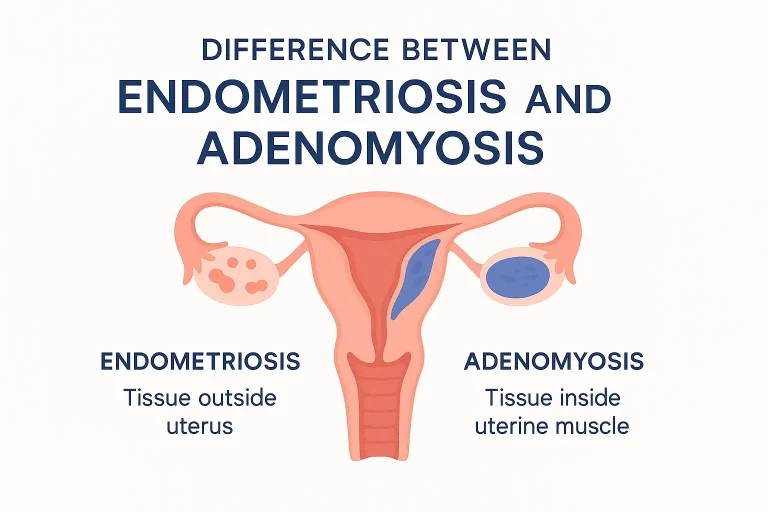
The difference between endometriosis and adenomyosis is often confusing for women experiencing pelvic pain, heavy bleeding, or infertility. Both involve the uterine lining (endometrium), but the way this tissue grows — and the health consequences — are very different. Understanding endometriosis vs adenomyosis helps women seek early diagnosis, better treatment, and improved quality of life.
At Mayflower Hospital, our gynecology experts see many women who are unsure whether their symptoms signal endometriosis, adenomyosis, or another condition. This blog explains the differences, similarities, and treatment pathways — while also highlighting how we help women live healthier, pain-free lives.
What is Endometriosis?
Endometriosis is a chronic condition where tissue similar to the uterine lining grows outside the uterus. These growths may involve the ovaries, fallopian tubes, pelvic walls, bladder, or intestines. Because the tissue behaves like normal endometrium, it thickens and bleeds with each cycle. Unlike menstrual blood, it cannot exit the body, causing inflammation, scar tissue, and cysts.
Why it happens (brief): Hormonal signals and immune responses are thought to drive the misplaced tissue. Family history and early, painful periods may raise risk.
Symptoms of Endometriosis
- Severe menstrual cramps and chronic pelvic pain
- Pain during or after intercourse
- Painful urination or bowel movements during periods
- Heavy or irregular menstrual bleeding
- Bloating, fatigue, and lower back discomfort
- Infertility or difficulty conceiving
Endometriosis differs from adenomyosis because the tissue is located outside the uterus, not inside the uterine muscle. Recognizing these patterns helps women distinguish endometriosis vs adenomyosis and seek timely evaluation. If you are comparing endometriosis or adenomyosis symptoms, note when pain occurs and what triggers it. Early recognition helps reduce pain, protect fertility, and guide the right care at Mayflower Hospital.
What is Adenomyosis?
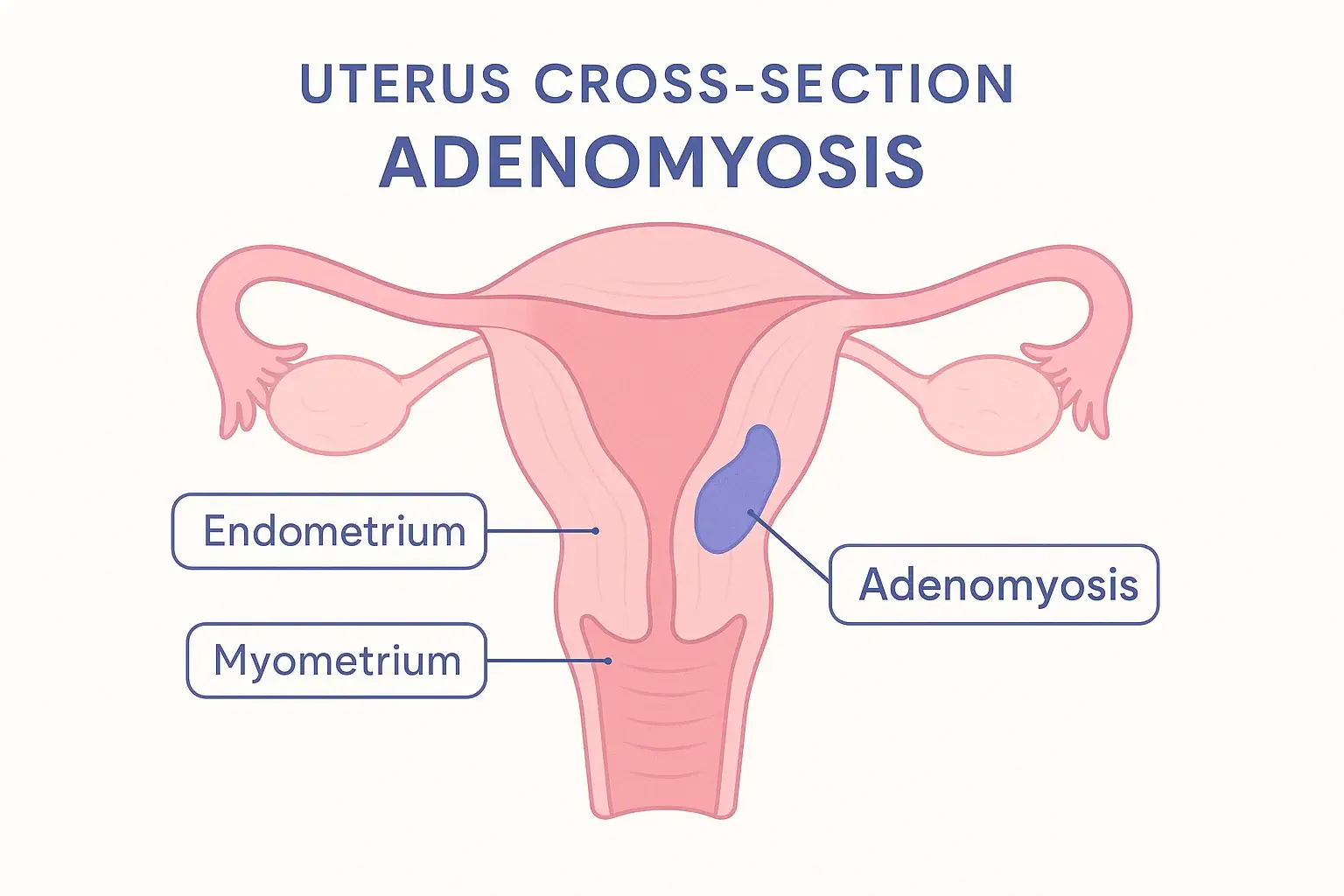
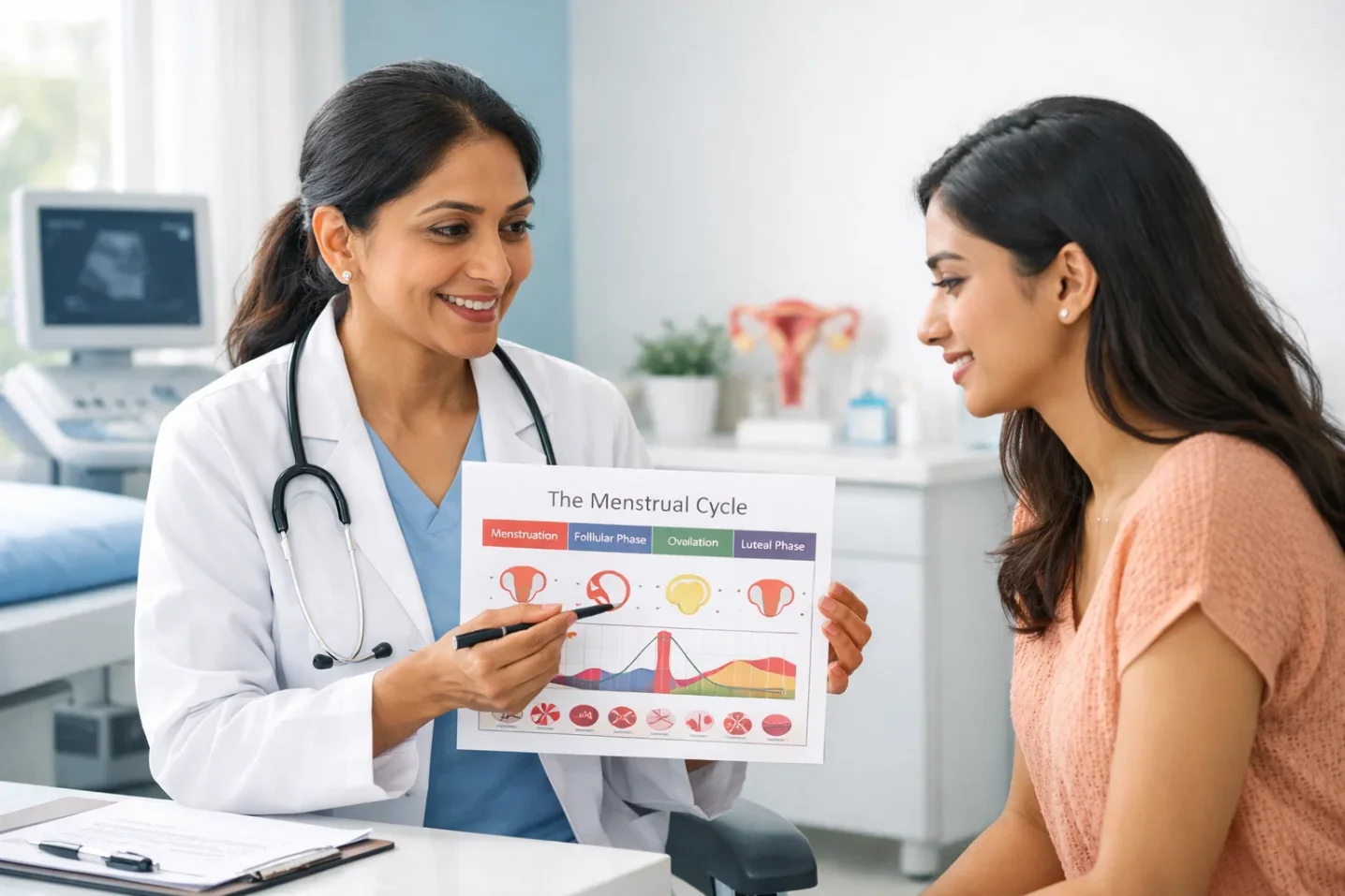
Adenomyosis occurs when the uterine lining (endometrium) grows into the muscular wall of the uterus (myometrium). The uterus often becomes enlarged and tender, leading to heavy, painful periods. Unlike endometriosis, the tissue remains within the uterine muscle.
Why it happens (brief): Hormonal factors, prior childbirth, and uterine surgeries are associated with adenomyosis. Age thirty to fifty is the most commonly affected group.
Symptoms of Adenomyosis
- Heavy or prolonged menstrual bleeding with clots
- Severe, cramp-like pain that peaks during periods
- Pelvic pressure or a feeling of fullness
- Pain that worsens with age or after childbirth
- Fatigue due to excessive bleeding
Women sometimes confuse adenomyosis vs endometriosis because both cause pelvic pain. A key distinction is location: adenomyosis pain is often deep, central, and linked to heavy bleeding, while endometriosis can cause pain with intercourse, ovulation, or bowel movements. Many readers compare adenomyosis vs endometriosis symptoms to decide when to seek care. Clear diagnosis ensures the right treatment plan at Mayflower Hospital.
Causes and Risk Factors
Both endometriosis and adenomyosis are complex conditions with no single cause. Instead, they arise from a mix of genetic, hormonal, and environmental influences. Understanding possible causes helps explain why some women are at greater risk than others.
Endometriosis Causes and Risk Factors
- Retrograde menstruation: Menstrual blood flows backward into the pelvis instead of leaving the body.
- Hormonal influence: Estrogen fuels tissue growth outside the uterus.
- Genetics: Women with a family history face a higher risk.
- Immune system issues: The body may fail to clear misplaced tissue.
- Risk factors: Early menstruation, short menstrual cycles, or heavy bleeding increase likelihood.
Adenomyosis Causes and Risk Factors
- Invasive growth: Endometrial tissue penetrates into the uterine muscle, possibly after childbirth or surgery.
- Hormonal role: High estrogen levels contribute to disease progression.
- Age and childbirth: Most common in women between 30 and 50, especially those who have given birth.
- Risk factors: Uterine surgery (such as C-section or fibroid removal) and long menstrual history.
While the root causes differ, both conditions are hormone-driven and strongly influenced by reproductive history. Recognizing these patterns helps women compare endometriosis vs adenomyosis risks more clearly.
Endometriosis vs Adenomyosis: Core Differences
Both conditions involve endometrial tissue, but the differences in location, symptoms, and fertility impact are crucial. Here is a quick breakdown to help women understand adenomyosis vs endometriosis symptoms and long-term health effects:
| Feature | Endometriosis | Adenomyosis |
| Tissue location | Outside the uterus (on ovaries, tubes, pelvic lining, bladder, intestines) | Inside the uterine muscle wall |
| Pain pattern | Chronic pelvic pain, pain during intercourse, ovulation, urination, bowel movements | Severe, “labor-like” cramps during menstruation |
| Menstrual changes | Heavy or irregular bleeding | Heavy, prolonged bleeding with large clots |
| Uterus size | Usually normal | Often enlarged and tender |
| Infertility risk | High — scar tissue and adhesions can block fallopian tubes | Possible — implantation may be affected, but less common |
| Diagnosis | Laparoscopy, ultrasound, MRI | Ultrasound, MRI |
This comparison shows that while both cause pelvic pain and heavy bleeding, the underlying process is different. Women often ask about endometriosis vs adenomyosis infertility: endometriosis has a stronger association with difficulty conceiving, while adenomyosis primarily disrupts quality of life through heavy periods and uterine pain.
Symptom Overlaps and Differences
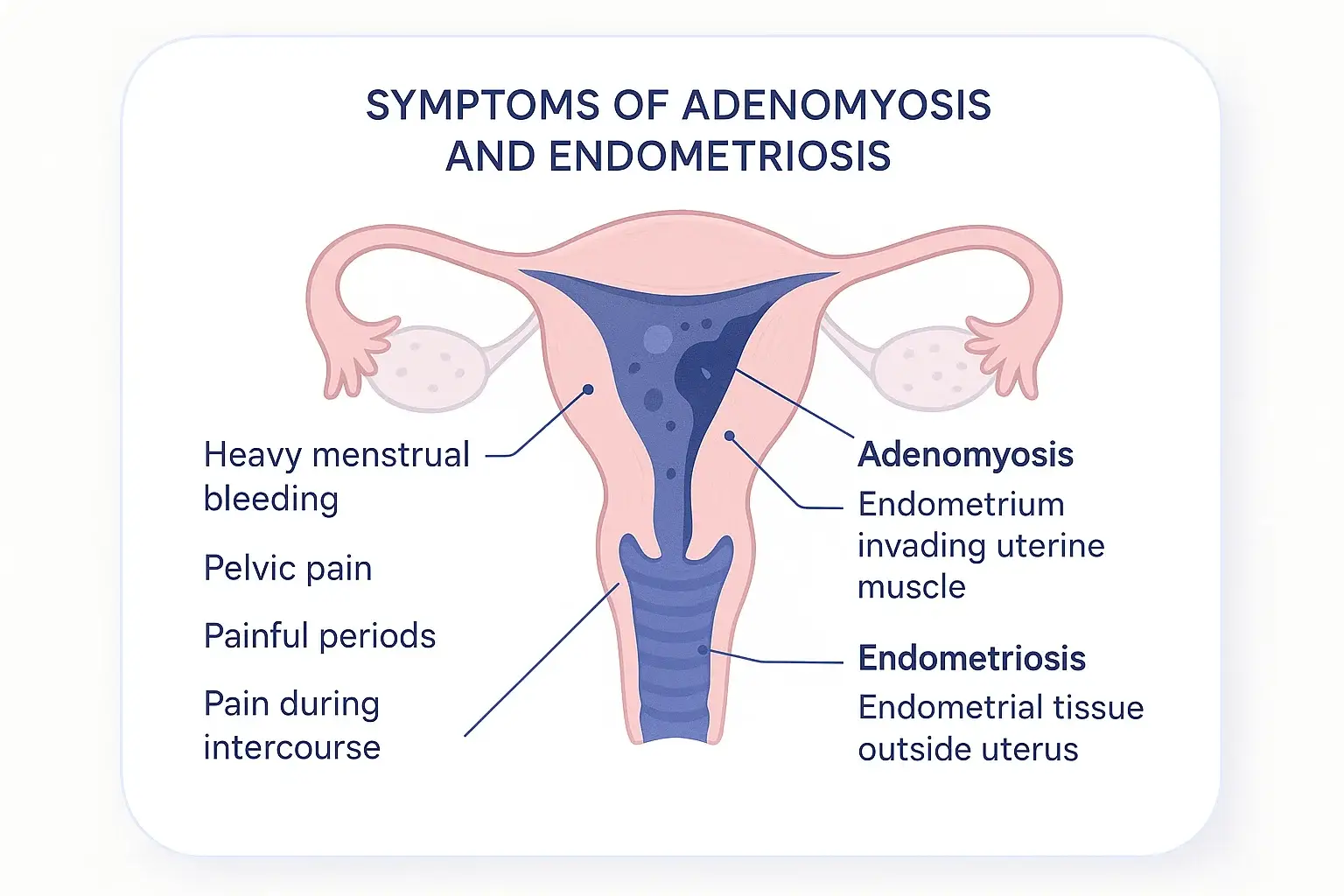
Because both conditions involve uterine tissue, many women struggle to distinguish them. Both can cause:
- Severe menstrual cramps
- Heavy bleeding
- Pelvic discomfort
- Fatigue and reduced energy
However, there are important distinctions when comparing adenomyosis vs endometriosis symptoms:
- Endometriosis pain often occurs outside the uterus, especially during ovulation, sex, or bowel movements.
- Adenomyosis pain is usually deep, central, and tied to heavy uterine bleeding.
- Endometriosis symptoms may appear earlier in life, while adenomyosis is more common after childbirth.
Women often ask: “adenomyosis or endometriosis which is worse?” The answer depends on what matters most — fertility, pain, or bleeding control.
Adenomyosis vs Endometriosis Pain Difference
Pain is one of the most disruptive features of both conditions.
- Endometriosis pain
- Chronic pelvic pain that can spread to the back and legs.
- Pain may persist outside menstruation.
- Often worsens during intercourse or bowel movements.
- Adenomyosis pain
- Concentrated in the uterus.
- Typically described as “knife-like” or “labor-like” cramps.
- Peaks during menstruation, often accompanied by heavy bleeding.
Specialists at Mayflower Hospital note that adenomyosis pain is often worse for menstrual cramping, while endometriosis pain is more widespread and linked with infertility. Both conditions reduce quality of life if left untreated.
Endometriosis vs Adenomyosis and Infertility
For many women, the most pressing question is how these conditions affect their chances of becoming pregnant. While both conditions can interfere with fertility, they do so in different ways.
Endometriosis and Infertility
- Scar tissue and adhesions: These can block fallopian tubes, preventing eggs and sperm from meeting.
- Inflammation: Chronic inflammation in the pelvis can damage eggs and interfere with implantation.
- Endometriomas: Ovarian cysts caused by endometriosis may reduce ovarian reserve.
- Higher infertility rate: Studies show that up to 40% of women with endometriosis may face infertility.
Adenomyosis and Infertility
- Implantation issues: Thickened uterine walls can make it harder for embryos to implant.
- Heavy bleeding: Frequent blood loss can reduce overall reproductive health.
- Pregnancy complications: Adenomyosis is linked with higher miscarriage risk in some studies.
- Lower direct infertility rate: Compared with endometriosis, adenomyosis is less likely to cause infertility, but it may contribute to reduced success with natural conception or IVF.
At Mayflower Hospital, specialists often evaluate women with both conditions. A personalized plan may include laparoscopy for endometriosis, hormone therapy, or advanced fertility treatments like IVF. When comparing endometriosis vs adenomyosis, the focus is always on protecting fertility while managing pain and bleeding.
How Are Endometriosis and Adenomyosis Diagnosed?
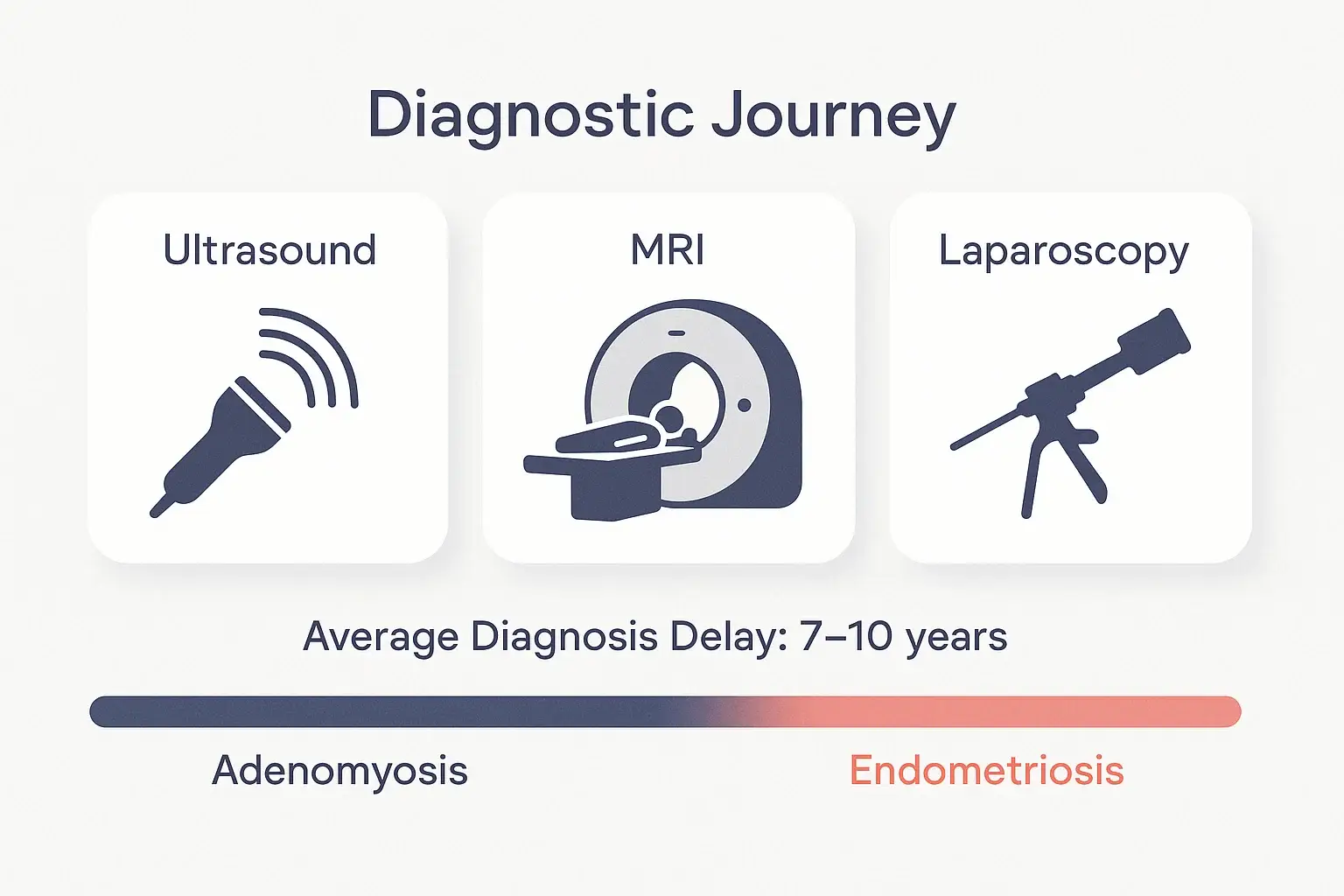
Both conditions share overlapping symptoms, which makes diagnosis difficult without medical imaging and specialist evaluation. Accurate identification ensures the right treatment plan.
Ultrasound and MRI
- Ultrasound: A first-line, non-invasive test that can detect adenomyosis and ovarian cysts linked to endometriosis.
- MRI: Provides detailed imaging to confirm deep infiltrating endometriosis or advanced adenomyosis.
These tools are essential for differentiating the two conditions.
Laparoscopy for Endometriosis
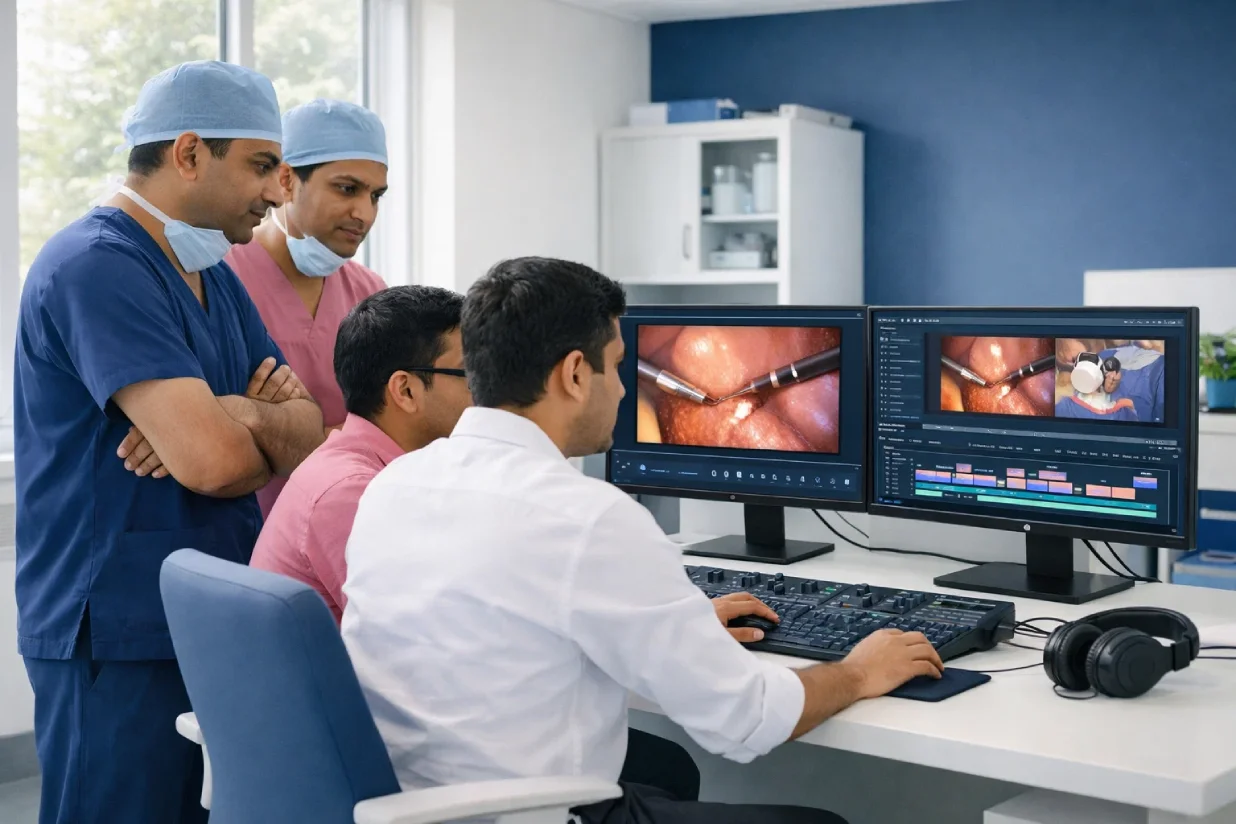
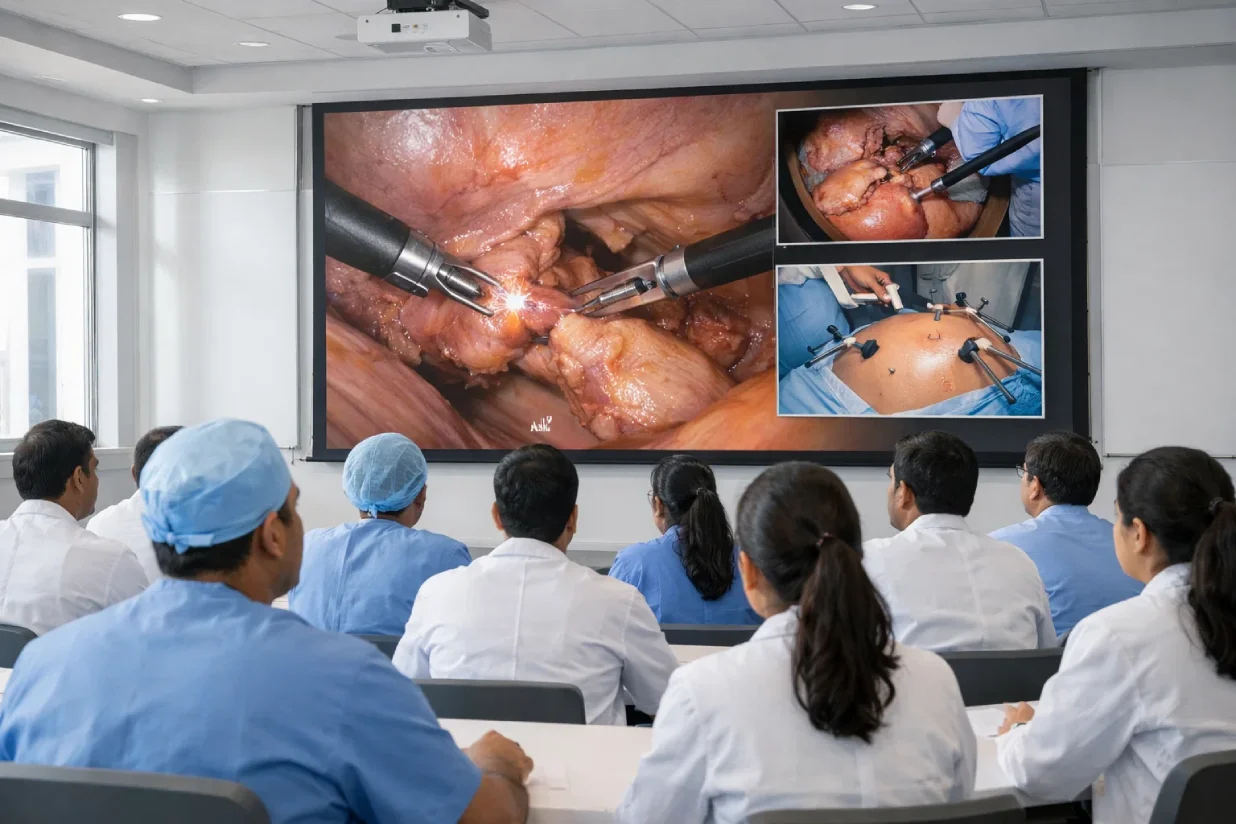
Endometriosis often requires laparoscopy — a minimally invasive procedure where doctors insert a small camera to view and remove lesions. This remains the gold standard for both diagnosis and treatment.
Clinical Evaluation
Doctors combine imaging with pelvic examinations and symptom history. Since pain and bleeding patterns overlap, a specialist assessment is crucial. The right use of endometriosis adenomyosis ultrasound helps prevent misdiagnosis and ensures women get targeted care at Mayflower Hospital.
Why Are Endometriosis and Adenomyosis Hard to Diagnose?
One of the biggest challenges women face is diagnosis delay. Globally, studies suggest women wait an average of 7–10 years before receiving a confirmed diagnosis of endometriosis. Adenomyosis is often overlooked entirely until imaging is done for another reason.
Why Diagnosis Is Delayed
- Overlapping symptoms: Pain and heavy bleeding are often dismissed as “normal period problems.”
- Misdiagnosis: Conditions like fibroids, PCOS, or urinary issues may be confused with endometriosis or adenomyosis.
- Limited awareness: Even in urban settings, many women don’t know these conditions exist until fertility is affected.
- Access to specialists: Accurate imaging and laparoscopic evaluation require advanced facilities.
How Mayflower Hospital Reduces Delays
- Expert gynecologists specializing in pelvic pain.
- Access to high-resolution ultrasound and MRI.
- Onsite minimally invasive surgical teams for laparoscopy.
- Patient-focused counseling to recognize early symptoms.
By bridging this diagnostic gap, Mayflower ensures women don’t have to wait years for answers, especially when comparing endometriosis vs adenomyosis symptoms.
Impact on Daily Life
Both endometriosis and adenomyosis affect far more than periods. They disrupt work, relationships, fertility planning, and emotional well-being. At Mayflower Hospital, patients often share how these conditions influence daily routines.
Physical Impact
- Fatigue: Chronic pain and heavy bleeding cause exhaustion, even outside periods.
- Activity limitations: Pain may prevent exercise, travel, or social events.
- Disrupted sleep: Nighttime cramps and heavy bleeding interfere with rest.
Emotional and Mental Health
- Anxiety and depression: Unpredictable symptoms can increase stress.
- Relationship strain: Pain during intimacy may impact couples.
- Isolation: Women often feel misunderstood when symptoms are dismissed as “normal.”
Professional and Social Life
- Missed work or school: Severe cramps and bleeding may cause frequent absences.
- Reduced productivity: Fatigue and pain affect focus.
- Healthcare costs: Ongoing treatment, fertility planning, and diagnostic tests increase financial stress.
These realities make it clear: whether comparing adenomyosis vs endometriosis pain difference or infertility impact, both conditions lower quality of life. Mayflower Hospital offers holistic care — addressing medical, emotional, and lifestyle needs.
Endometriosis and Adenomyosis in Teens and Young Women
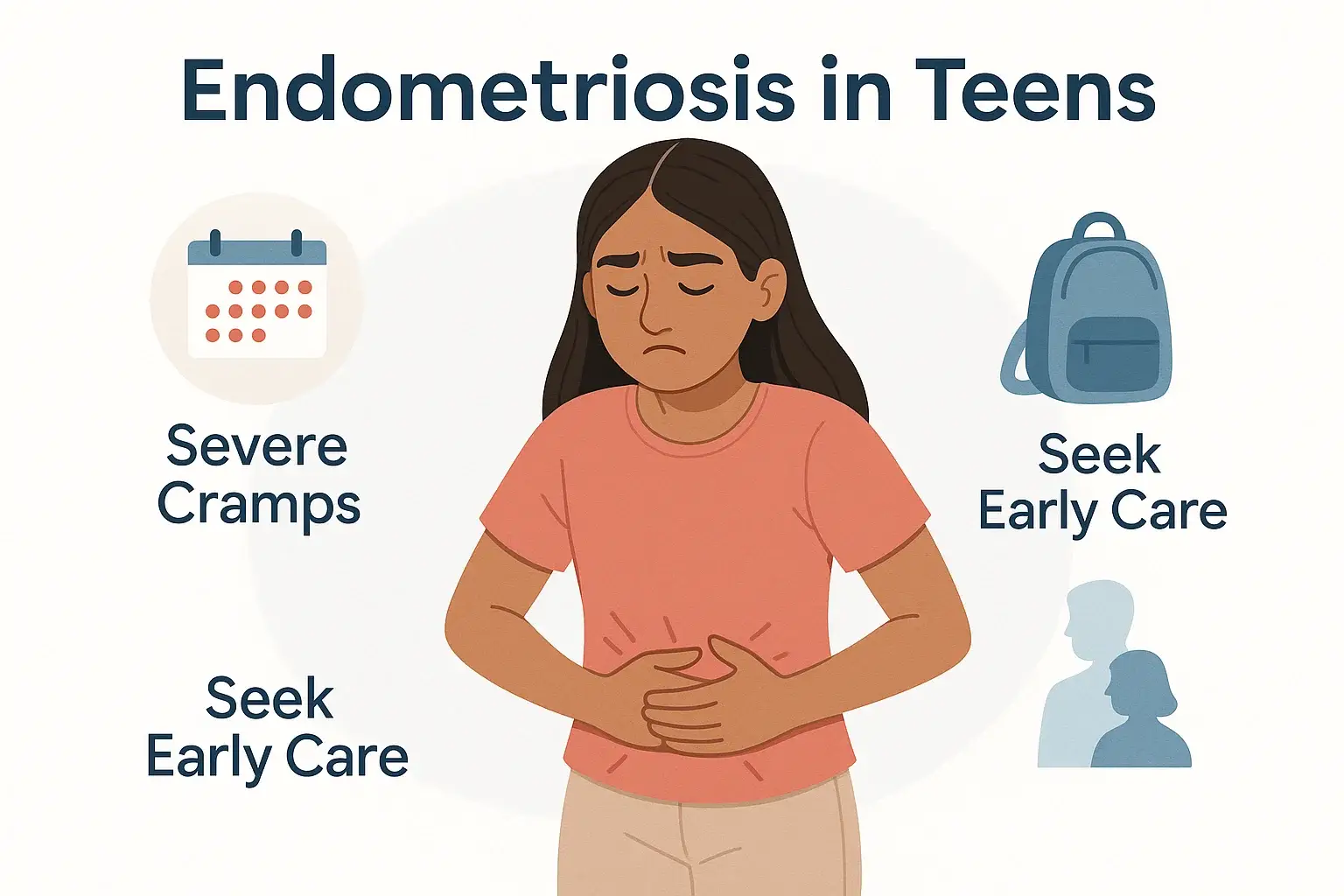
Endometriosis is increasingly recognized in teenagers, though it is often underdiagnosed. Adenomyosis is less common in teens but can still appear in young women, especially after early menstruation or uterine surgery.
Endometriosis in Teens
- Symptoms may include severe period pain, nausea, and fatigue.
- Often mistaken for “normal period cramps,” delaying diagnosis.
- Studies show early onset may predict more severe disease in adulthood.
- Parents and young women should monitor persistent symptoms and seek evaluation if pain disrupts school or daily life.
Adenomyosis in Young Women
- Rare in teens but possible after early menstruation or uterine procedures.
- Symptoms include heavy bleeding and pelvic pressure.
- Because adenomyosis is more common in women over 30, cases in younger women require careful imaging and evaluation.
Why Early Diagnosis Matters
The earlier these conditions are identified, the better the chances of preserving fertility and preventing long-term pain. At Mayflower Hospital, gynecologists trained in adolescent care use gentle, patient-friendly diagnostic methods to guide teens and young women through evaluation.
Lifestyle and Diet for Endometriosis and Adenomyosis
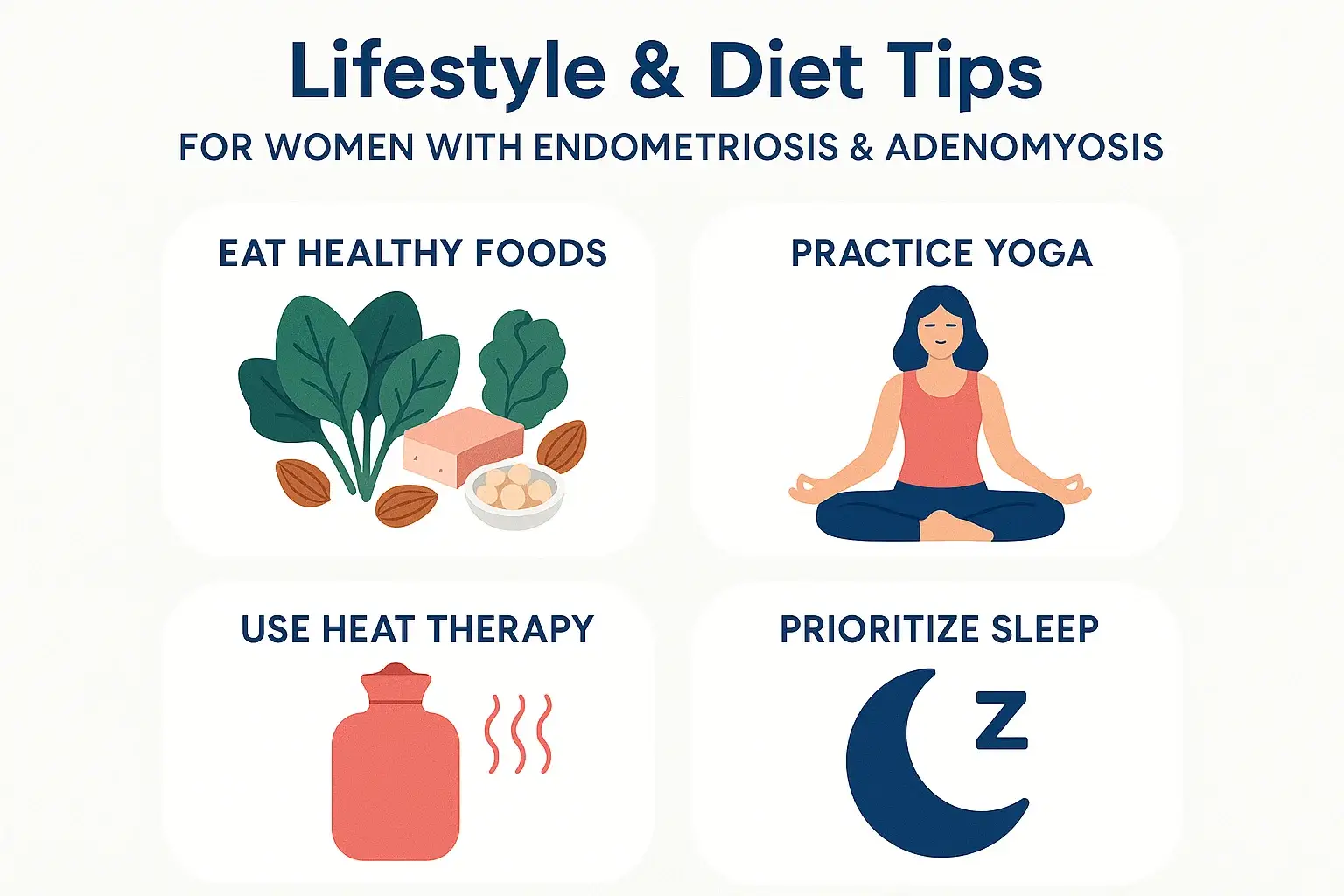
While medical treatment remains essential, daily habits can make a big difference in symptom relief. Adopting a supportive lifestyle and diet helps reduce inflammation, improve energy, and complement medical therapies.
Diet Recommendations
- Anti-inflammatory foods: Omega-3 rich fish, leafy greens, nuts, and berries help reduce inflammation.
- Iron-rich foods: Spinach, lentils, and lean meats counter heavy blood loss from adenomyosis.
- Limit triggers: Red meat, caffeine, processed sugar, and alcohol can worsen cramps and fatigue.
- Balanced supplements: Vitamin D, magnesium, and B vitamins may help with muscle relaxation and hormone regulation.
Lifestyle Modifications
- Heat therapy: Hot water bottles or warm baths reduce cramp intensity.
- Exercise: Low-impact activities like walking, yoga, and swimming improve blood flow and reduce stress.
- Stress management: Breathing exercises, meditation, and quality sleep strengthen overall resilience.
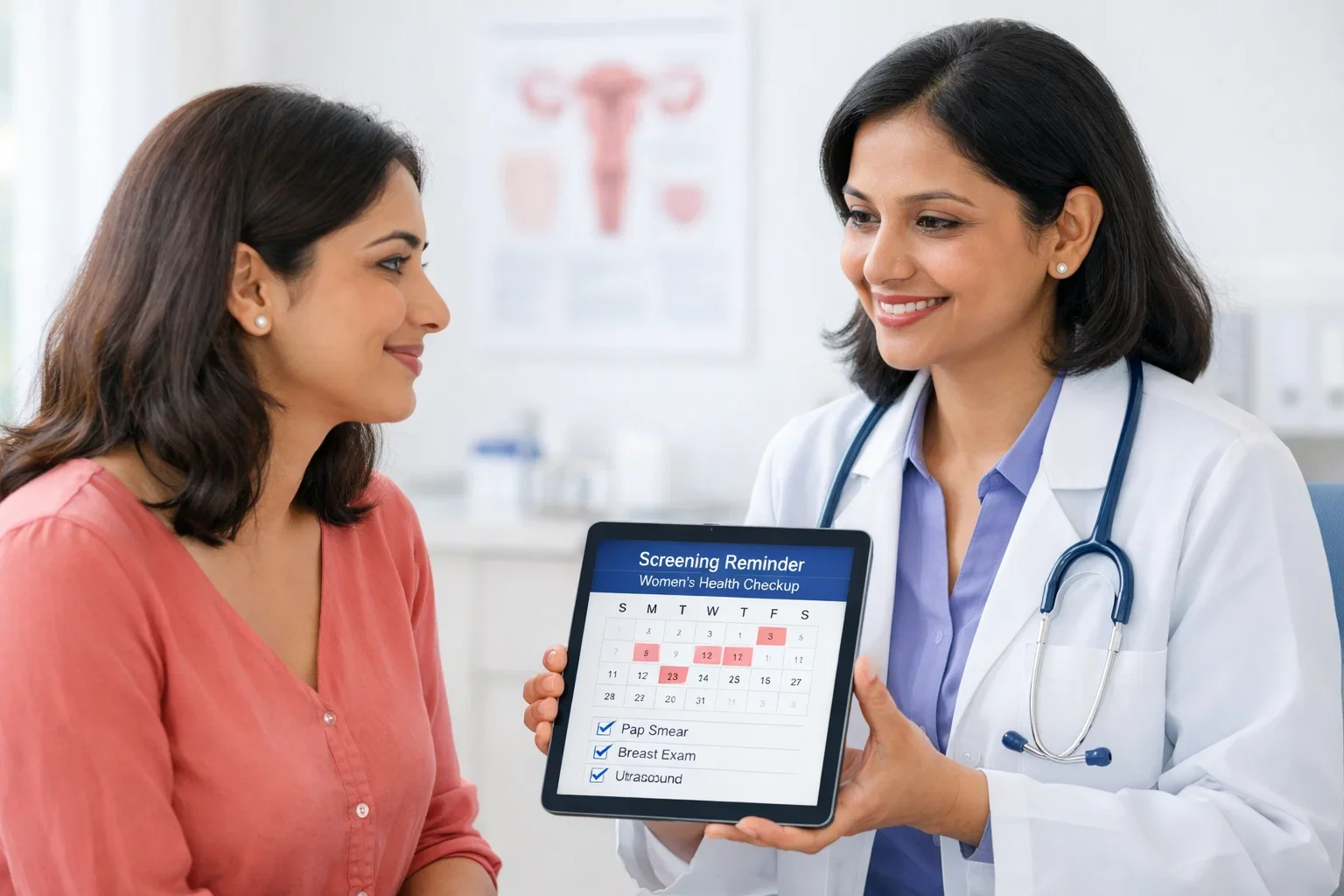
- Tracking cycles: Apps or calendars help monitor pain, bleeding, and fertility windows.
Although not a cure, a structured adenomyosis vs endometriosis diet combined with healthy routines helps women manage symptoms more effectively.
Treatment Options for Endometriosis and Adenomyosis
At Mayflower Hospital, treatment plans are tailored to each woman’s age, fertility goals, and severity of symptoms. Our specialists use advanced diagnostics, minimally invasive techniques, and compassionate counseling to ensure comprehensive care.
Endometriosis Treatments
- Pain management: Non-steroidal anti-inflammatory drugs (NSAIDs) to relieve cramps and pelvic pain.
- Hormonal therapy: Birth control pills, hormonal IUDs, and GnRH analogs slow tissue growth.
- Laparoscopy: Gold-standard minimally invasive surgery to remove endometrial implants and adhesions.
- Fertility support: For women facing infertility, Mayflower offers IVF and advanced reproductive technologies.
Adenomyosis Treatments
- Hormonal therapy: Hormonal IUDs, contraceptives, or GnRH agonists reduce heavy bleeding.
- Minimally invasive options: Uterine artery embolization or conservative surgery for symptom relief.
- Hysterectomy: In severe cases, hysterectomy may be recommended when fertility is no longer desired.
Why Choose Mayflower Hospital?
- Specialized women’s health team: Expert gynecologists with deep experience in endometriosis and adenomyosis.
- Advanced imaging & laparoscopy: High-resolution diagnostics and modern surgical care.
- Fertility-first approach: Preservation of reproductive health is prioritized wherever possible.
- Holistic care: Pain management, nutrition guidance, and emotional support included in every plan.
When considering endometriosis vs adenomyosis infertility or pain, Mayflower Hospital provides evidence-led, personalized solutions that go beyond symptom control — restoring quality of life and supporting women’s long-term health.
When Should You See a Doctor?
Many women dismiss heavy bleeding or painful periods as “normal,” but persistent symptoms may signal endometriosis or adenomyosis. Early medical care ensures faster diagnosis and better outcomes.
You should seek a consultation if you experience:
- Severe cramps that do not improve with routine painkillers
- Heavy or prolonged bleeding, often with clots
- Pain during intercourse, urination, or bowel movements
- Difficulty conceiving despite trying for six to twelve months
- Fatigue, mood changes, or reduced quality of life
At Mayflower Hospital, our specialists combine expertise in gynecology, radiology, and fertility care to provide accurate diagnosis and personalized treatment. Whether comparing endometriosis vs adenomyosis symptoms or evaluating infertility risks, professional guidance is key.
Book your consultation today with our Endometriosis & Adenomyosis Specialists at Mayflower Hospital and take the first step toward relief, recovery, and reproductive health.
Frequently Asked Questions
Endometriosis occurs when tissue grows outside the uterus, while adenomyosis happens when the uterine lining grows into the muscle wall. Both cause pain and bleeding, but their impact on fertility and treatment pathways differ.
Yes. Endometriosis vs adenomyosis infertility risks differ: endometriosis often blocks fallopian tubes and causes adhesions, while adenomyosis may interfere with embryo implantation and increase miscarriage risk.
The average endometriosis diagnosis delay is 7–10 years because symptoms like cramps or heavy bleeding are misattributed to “normal periods.” Advanced imaging and laparoscopy at Mayflower Hospital help reduce this delay.
It depends. Adenomyosis pain is usually central, intense, and “labor-like” during periods, while endometriosis pain is widespread, sometimes persistent outside menstruation, and linked to infertility.
Yes. Some women experience both, making symptoms more complex. Specialists may use ultrasound, MRI, and laparoscopy to detect and treat coexisting conditions.
No. Symptoms may temporarily improve due to hormonal changes, but neither condition is “cured” by pregnancy. Medical management or surgery may still be required.
Adenomyosis: Best confirmed by ultrasound or MRI.
Endometriosis: Can be suspected by imaging but usually requires laparoscopy for confirmation.
Conclusion – Difference Between Endometriosis and Adenomyosis
The difference between endometriosis and adenomyosis lies in where the uterine tissue grows — outside the uterus in endometriosis, and inside the uterine muscle in adenomyosis. Both conditions can cause severe pain, heavy bleeding, and fertility challenges, but they affect women in distinct ways.
Understanding these differences helps women recognize symptoms earlier, avoid long delays in diagnosis, and seek the right treatment. At Mayflower Hospital, our gynecology team combines advanced imaging, minimally invasive surgery, fertility-first approaches, and holistic support to manage both conditions effectively.
If you experience persistent pain, heavy bleeding, or infertility concerns, consult the Endometriosis & Adenomyosis Specialists at Mayflower Hospital today. Early care means less pain, better fertility outcomes, and a healthier future.