


Department Doctors

Procedures and Conditions
A -C
Anesthesia procedures
Anaesthesia includes different techniques that may reduce sensation, relieve pain, or produce sedation or unconsciousness during selected procedures. The technique used depends on the procedure, the patient's health, and the anaesthesiologist's assessment.
Central neuraxial block
Central neuraxial blocks involve administering anaesthetic medication in a specified area around the spinal cord and its associated structures. The technique, suitability, potential benefits, and risks depend on the procedure and the patient's clinical circumstances.
Combined spinal + epidural Anesthesia
Combined spinal-epidural anaesthesia uses spinal and epidural techniques together in selected clinical situations. Whether it is appropriate depends on the procedure, the patient's condition, and the anaesthesiologist's assessment.
Conscious Sedation with intubation
Sedation and airway management techniques may be used in selected procedures according to the patient's needs. Intubation and ventilation are specific clinical interventions, and the appropriate approach is determined by the anaesthesia team. Confirm the terminology and description of this service with a qualified anaesthesiologist.
Conscious Sedation with supraglottic devices
Sedation and supraglottic airway devices may be used in selected clinical situations. The level of sedation, airway support, monitoring, and suitability depend on the procedure and the patient's clinical needs.
D -G
Epidural anesthesia
Epidural anaesthesia involves administering medication into the epidural space to provide anaesthesia or pain relief in selected situations. Its effects, suitability, and potential risks vary depending on the clinical circumstances.
General anesthesia
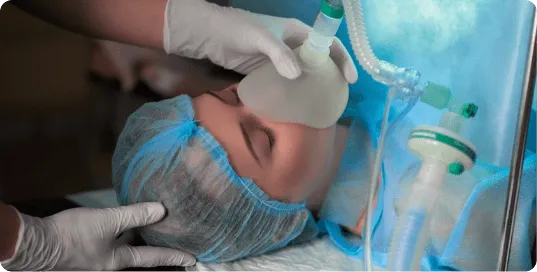
General anaesthesia uses medicines to produce a controlled state of unconsciousness for selected procedures. The anaesthesia team monitors the patient during care, and the technique, expected effects, and potential risks depend on the patient's health and the procedure.
H -P
Local blocks
Local anaesthetic blocks involve administering medication to reduce sensation in a specific area of the body. The technique used and its effects depend on the site, procedure, and patient's clinical circumstances.
Peri operative pain management
Peri-operative pain management may include assessment before a procedure, planning for pain relief during surgery, and support during recovery. Medication and other pain-management approaches are selected according to the procedure, the patient's health, and clinical assessment. The level of pain relief and recovery experience varies between individuals.
Post operative HDU Care
High Dependency Unit (HDU) care may provide closer observation and monitoring for selected patients following surgery or during illness. Monitoring arrangements and the level of support depend on the patient's condition and the unit's confirmed capabilities.
R - T
Spinal anesthesia
Spinal anaesthesia involves administering medication into the cerebrospinal fluid to produce a temporary block of sensation in selected areas of the body. Its effects, suitability, and potential risks depend on the procedure and the patient's clinical circumstances.
Total intravenous
Total intravenous anaesthesia (TIVA) uses medicines administered through a vein to provide general anaesthesia for selected procedures. The medicines and monitoring approach are determined by the anaesthesia team according to the procedure and the patient's needs.
Transverse abdominal perineal block
A transversus abdominis plane (TAP) block is a regional anaesthesia technique that may be used as part of pain management for selected abdominal procedures. Its suitability and expected effects depend on the procedure and the patient's clinical circumstances.
Other Departments

Gynaecology
Gynaecology services may include assessment of PCOS, fibroids, menstrual disorders, ovarian cysts, cervical health, and selected gynaecological conditions requiring surgery. Contact the hospital to confirm available services and consultation arrangements.
Learn More
Endometriosis
Endometriosis is a condition in which tissue similar to the lining of the uterus grows outside the uterus. It may be associated with pelvic pain, painful periods, and fertility concerns. Assessment and treatment options depend on individual symptoms and clinical findings. Contact the hospital to confirm available endometriosis services.
Learn More
Gynaec Cosmetology
Gynaecological and intimate health services may include assessment of concerns relating to the genital area. The procedures offered, their suitability, potential risks, and expected outcomes depend on clinical assessment. Contact the hospital to confirm available services, clinician qualifications, and consultation arrangements.
Learn More