




Menopause symptoms mark one of the most significant transitions in a woman’s life, signaling the natural end of menstrual cycles and reproductive years. While menopause is not a disease, the symptoms of menopause can affect physical health, emotional well-being, and daily life in ways many women do not anticipate. From subtle early signs of menopause like irregular periods and sleep changes to more noticeable issues such as hot flashes, mood swings, and weight fluctuations, understanding what to expect can make this journey less overwhelming.
Every woman’s experience is unique, influenced by genetics, lifestyle, and overall health. Some may breeze through with minimal discomfort, while others encounter persistent challenges. By recognizing menopause age symptoms and knowing when to seek guidance, women can approach this stage with confidence. At Mayflower Hospital, we believe awareness is the first step to managing change, and expert care ensures no woman has to navigate menopause alone.
What Are Menopause Symptoms? Age & Timeline
The term menopause symptoms refers to the wide range of physical and emotional changes women may experience as their reproductive hormones decline. These changes are a natural part of aging, but their intensity and duration can differ greatly from one woman to another. For some, the symptoms of menopause may last only a few months, while others face ongoing challenges for years.
Menopause Age Symptoms – When Do They Start?
The average age of menopause is between 45 and 55, though genetics, lifestyle, and medical conditions can shift this timeline. Many women begin noticing menopause age symptoms in their mid-40s, while others may experience them earlier due to surgical interventions or conditions that affect ovarian function. Premature menopause, which occurs before age 40, is less common but carries its own set of health considerations.
Typical early indicators include irregular menstrual cycles, sudden changes in period flow, and subtle signs like sleep disturbances or mood shifts. These changes are often the body’s first signals that estrogen and progesterone levels are fluctuating.
By understanding the age range and variability of these symptoms, women can prepare for what lies ahead and seek timely support. Recognizing that menopause is not a “one size fits all” process helps normalize the experience and encourages proactive healthcare.
Early Signs and Stages of Menopause
The journey to menopause is gradual, often beginning with subtle changes that many women may overlook. Understanding the early signs of menopause and the stages leading up to it helps in planning lifestyle adjustments and medical support if needed. This transition unfolds in three phases: perimenopause, menopause, and postmenopause.
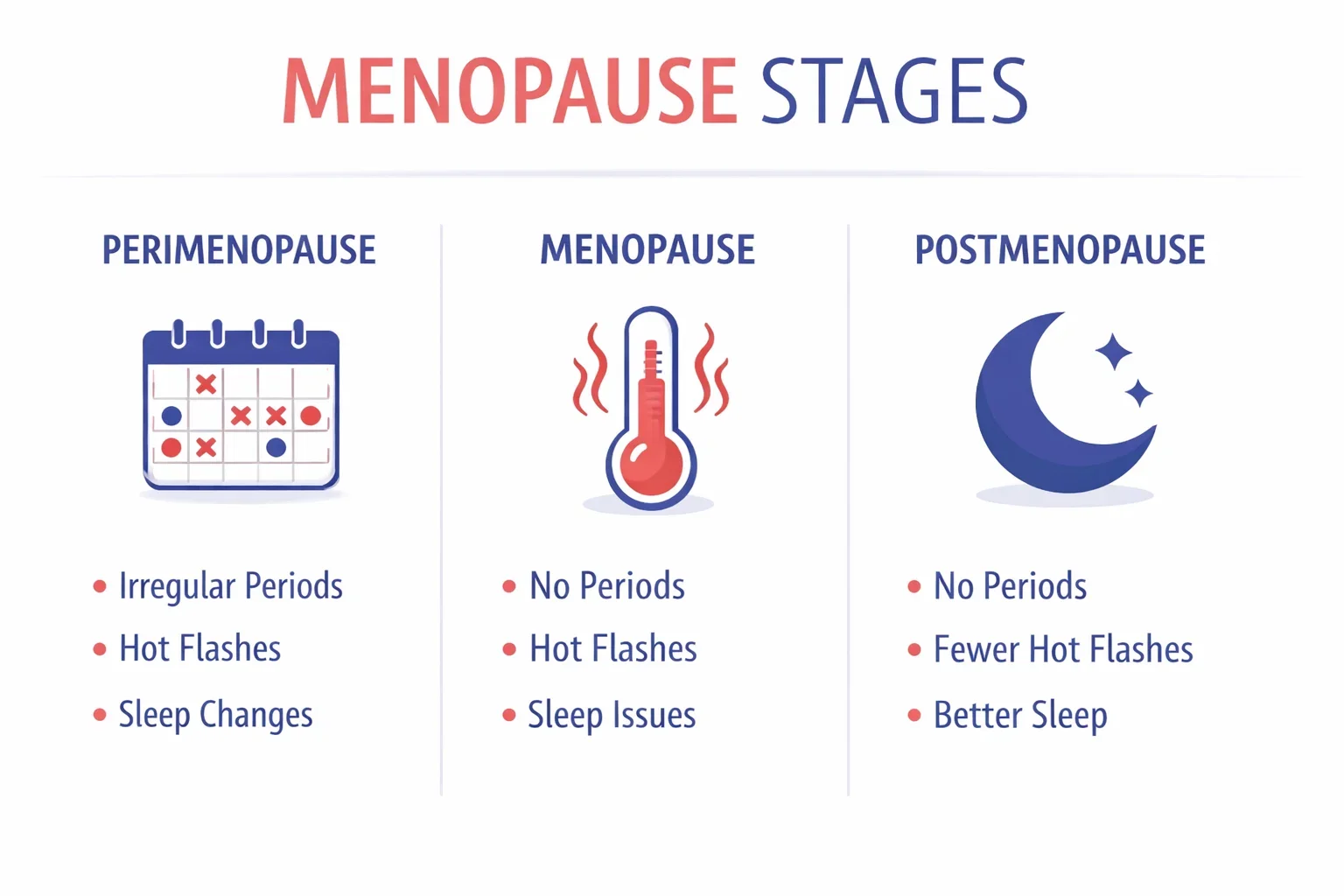
Early Signs of Menopause
The first indicators usually appear years before a woman’s final period. Common early signs of menopause include:
- Irregular or skipped periods
- Sleep disturbances or insomnia
- Vaginal dryness or discomfort during intimacy
- Mood changes such as irritability or anxiety
- Reduced libido and fatigue
These early symptoms stem from fluctuating hormone levels and often overlap with perimenopause.
Perimenopause Symptoms
Perimenopause is the stage when estrogen and progesterone production begins to decline more noticeably. Women in their late 30s or early 40s may experience:
- Hot flashes and night sweats
- Heavier or lighter menstrual flow
- Increased PMS-like symptoms
- Difficulty concentrating
- Weight redistribution, particularly around the abdomen
These perimenopause symptoms can last anywhere from 4 to 8 years, depending on individual factors.
Menopause vs Perimenopause Symptoms
It is common to confuse menopause vs perimenopause symptoms. The key distinction is:
- Perimenopause: Periods are irregular but not gone; symptoms come and go.
- Menopause: Defined as 12 consecutive months without menstruation; symptoms may persist but cycles stop completely.
| Stage | Key Symptoms | Cycle Status |
|---|---|---|
| Perimenopause | Hot flashes, mood swings, irregular flow | Still present but unpredictable |
| Menopause | Persistent hot flashes, dryness, weight gain | Absent for 12+ months |
This understanding empowers women to seek the right guidance at the right stage, whether for symptom management or long-term preventive care.
Common Menopause Symptoms Explained
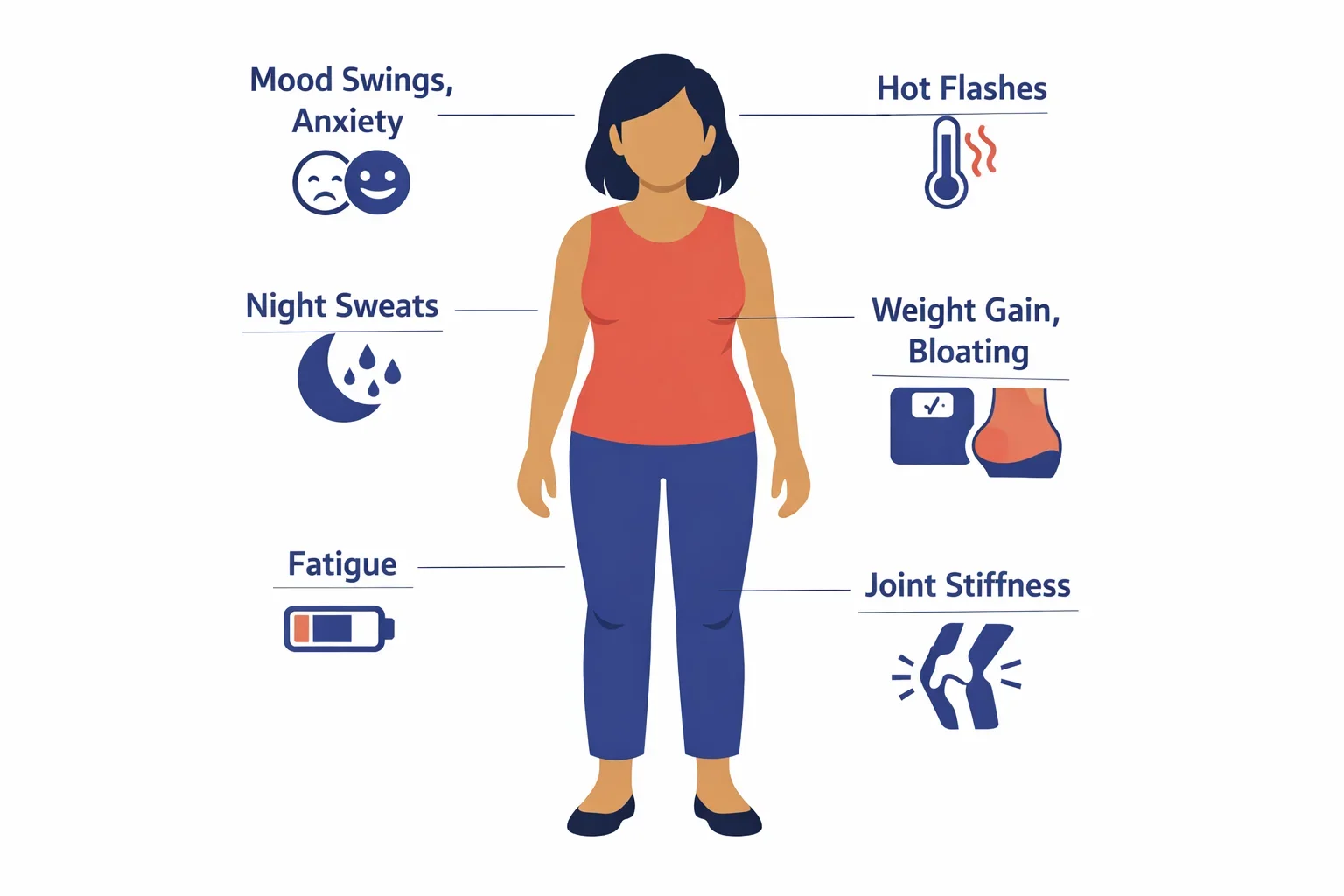
While every woman’s experience is unique, certain menopause symptoms are particularly common. These signs can range from mild and occasional to persistent and disruptive, depending on hormone levels, lifestyle, and overall health.
Hot Flashes and Their Triggers
Hot flashes are sudden sensations of heat, often accompanied by sweating, flushing, or a rapid heartbeat. They can occur during the day or night, with stress, spicy foods, alcohol, or caffeine acting as triggers. For some women, hot flashes last only a few months; for others, they persist for years.
Night Sweats During Menopause
Closely related to hot flashes, night sweats menopause disrupt sleep and contribute to fatigue, irritability, and poor concentration. Waking up drenched in sweat can also lead to anxiety around bedtime, worsening sleep quality over time.
Menopause Mood Swings and Emotional Changes
Hormonal shifts affect brain chemistry, which may result in menopause mood swings, irritability, sadness, or even heightened anxiety. Women with a history of depression or stress-related disorders may feel these symptoms more strongly. Emotional support and medical consultation can help restore balance.
Menopause Weight Gain and Metabolism Shifts
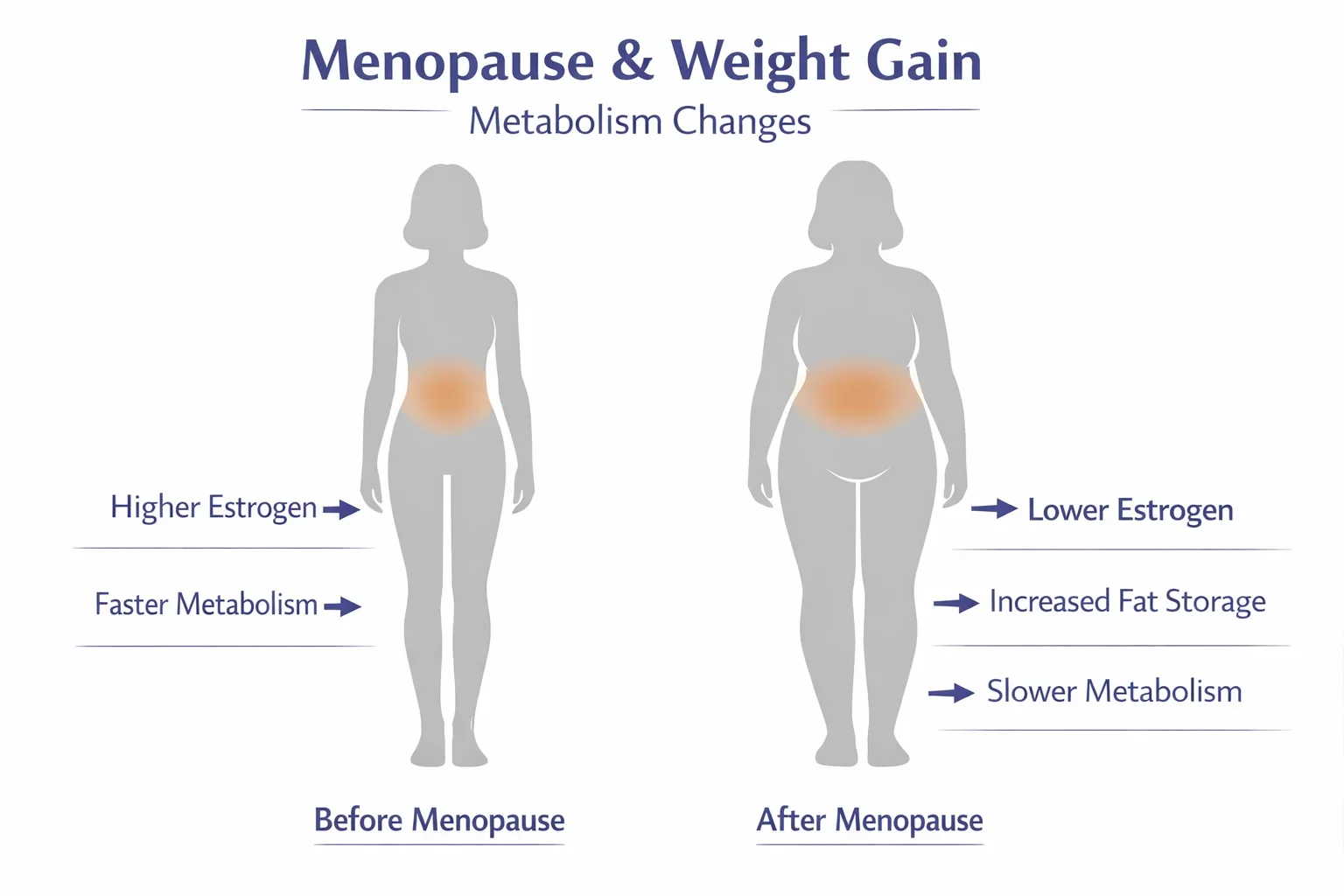
Declining estrogen can slow metabolism, leading to menopause weight gain, especially around the abdomen. Combined with reduced muscle mass and lifestyle factors, weight control becomes more challenging. Strength training, balanced nutrition, and adequate sleep play a crucial role in counteracting these changes.
Other Common Symptoms to Recognize
In addition to the well-known signs, many women also face:
- Vaginal dryness and discomfort
- Decreased libido
- Hair thinning and skin changes
- Joint stiffness
- Frequent urination or urinary tract infections
Though these changes are natural, they can affect quality of life if left unmanaged. Recognizing them early allows for timely lifestyle adjustments or treatments.
How Menopause Affects Overall Health
Menopause is more than just hot flashes and irregular cycles – it also influences long-term health. The decline in estrogen affects multiple systems in the body, making it essential to look beyond the immediate symptoms of menopause and understand the broader implications.
Bone and Joint Health
Lower estrogen accelerates bone loss, increasing the risk of osteoporosis and fractures. Many women experience joint stiffness and aches as part of their menopause symptoms, which can worsen with age. Bone density scans and a calcium-rich diet can help preserve bone health.
Heart and Metabolic Health
Estrogen plays a protective role in cardiovascular health. After menopause, women face a higher risk of high cholesterol, blood pressure changes, and heart disease. Combined with menopause weight gain, these shifts underscore the need for regular heart health checkups, exercise, and balanced nutrition.
Mental and Emotional Well-being
Beyond menopause mood swings, declining hormones can trigger anxiety, depression, or memory lapses. Sleep disturbances from night sweats menopause further amplify stress, creating a cycle that affects productivity and quality of life.
Skin, Hair, and Urogenital Health
Estrogen also influences collagen production and urinary tract health. Its decline often leads to thinning skin, hair loss, vaginal dryness, and increased susceptibility to urinary tract infections. While these are common, they can be managed with proper care and treatment.
Understanding these systemic effects highlights why menopause should be seen as a medical transition rather than just a reproductive milestone. Regular monitoring, preventive screenings, and early interventions are crucial to maintaining health and confidence during this stage.
Managing Menopause Symptoms
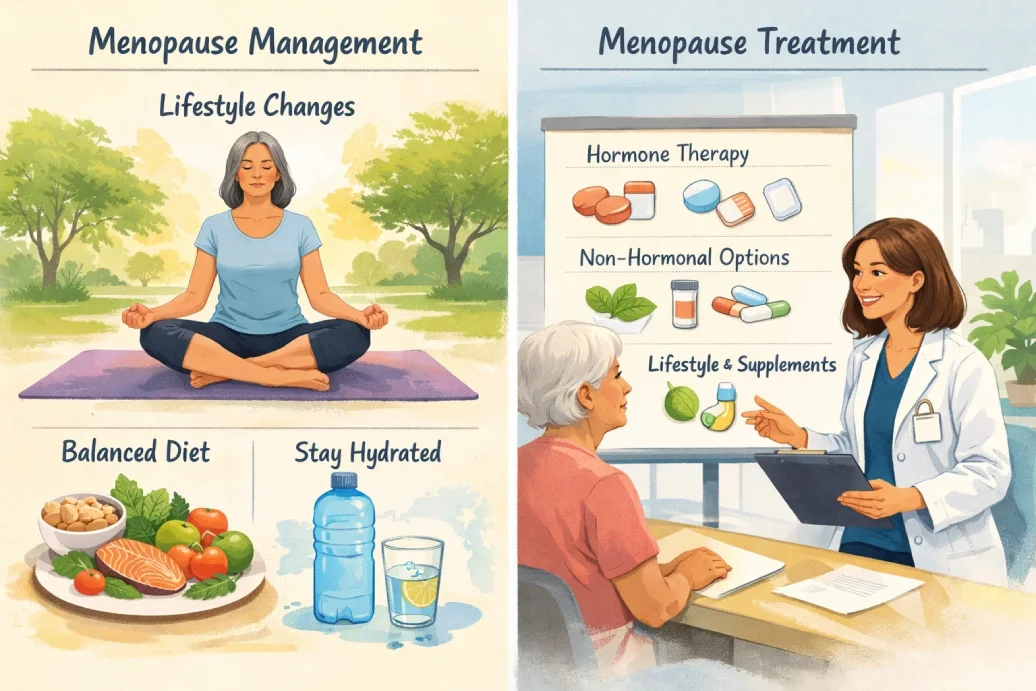
While menopause is a natural transition, the physical and emotional changes can feel overwhelming without proper guidance. The good news is that most menopause symptoms can be effectively managed through lifestyle strategies, medical support, and evidence-based treatments.
Lifestyle and Diet Modifications
Healthy daily habits are the foundation of symptom management. Women can reduce hot flashes and night sweats menopause by:
- Avoiding triggers like spicy food, caffeine, and alcohol
- Practicing relaxation techniques such as yoga or meditation
- Eating a balanced diet rich in whole grains, fruits, vegetables, and calcium
- Staying hydrated to regulate body temperature
Regular physical activity also helps with menopause weight gain and improves sleep and mood.
Exercise and Stress Management
Strength training, walking, and flexibility exercises improve metabolism and bone health. Stress-reduction practices like mindfulness and deep breathing can ease menopause mood swings and support emotional balance. Consistent sleep routines also prevent fatigue caused by night sweats.
Medical Options and Menopause Treatment (HRT and More)
When symptoms significantly affect quality of life, professional care is essential. Menopause treatment options include:
- Hormone Replacement Therapy (HRT): Restores estrogen/progesterone balance to reduce hot flashes, night sweats, and vaginal dryness. HRT may not be suitable for everyone and should be discussed with a gynecologist.
- Non-hormonal medications: Certain antidepressants or nerve-related medicines help reduce hot flashes and mood swings.
- Supplements & local therapies: Calcium, vitamin D, and vaginal estrogen creams address bone loss and urogenital discomfort.
At Mayflower Hospital, our gynecology team works with women to create tailored care plans that combine lifestyle guidance with medical therapies, ensuring safe and effective relief from menopause challenges.
When to Consult a Gynecologist
Although most menopause symptoms are manageable with lifestyle changes and routine care, certain signs require timely medical evaluation. Knowing when to seek professional help ensures that underlying health issues are not overlooked.
Red Flag Symptoms You Shouldn’t Ignore
While hot flashes and mood swings are expected, some symptoms signal a need for prompt consultation:
- Vaginal bleeding after menopause
- Extremely heavy or prolonged periods during perimenopause
- Sudden, unexplained weight loss or gain
- Severe depression, anxiety, or mood instability
- Persistent pelvic or abdominal pain
- Recurrent urinary tract infections
These may be linked to conditions beyond menopause and need medical assessment.
Importance of Regular Gynecology Checkups
Routine visits to a gynecologist in Ahmedabad help monitor bone density, cardiovascular health, and hormone levels. Regular checkups can:
- Detect osteoporosis early
- Track cholesterol and blood pressure changes
- Evaluate suitability for menopause treatment options such as HRT
- Provide counseling for sleep, mood, and lifestyle management
By addressing these aspects proactively, women reduce long-term health risks and improve overall well-being.
How Mayflower Hospital Supports Women’s Health
At Mayflower Hospital, our team of specialists emphasizes preventive care. From routine screenings to tailored treatment plans, we ensure that every woman receives compassionate, evidence-based support throughout the menopause transition. Whether it’s managing early signs of menopause or finding relief from severe hot flashes, our gynecology department is equipped to provide holistic care.
Support for Women at Mayflower Hospital
Navigating menopause symptoms can feel overwhelming, but the right medical guidance makes a significant difference. At Mayflower Hospital, we provide compassionate, evidence-led care tailored to every stage of a woman’s life, including perimenopause and menopause.
Comprehensive Gynecology Expertise
Our hospital is recognized as a leading women’s hospital in Ahmedabad, staffed with experienced gynecologists and specialists who focus on personalized care. From evaluating early signs of menopause to advanced menopause treatment options like HRT, we guide patients through every step of the transition.
Personalized Care Plans
We understand that no two women experience menopause in the same way. That’s why we design individualized treatment plans that may include:
- Hormone and non-hormonal therapies
- Lifestyle and diet counseling
- Emotional and psychological support
- Preventive screenings for bone, heart, and reproductive health
A Safe Space for Women’s Health
At Mayflower Hospital, patient comfort, privacy, and dignity come first. Our multidisciplinary approach ensures that physical symptoms, mental health, and long-term wellness are addressed together. Whether it’s managing hot flashes, night sweats, menopause, or emotional well-being, our team is here to help.
If you’re experiencing challenging menopause symptoms, connect with our gynecology department today to schedule a consultation and take the first step toward relief and balance.
Conclusion – Taking Charge of Menopause Symptoms
Menopause symptoms are a natural part of life, but they don’t have to compromise comfort or well-being. From early signs of menopause like irregular cycles and mood shifts to more challenging issues such as hot flashes, night sweats, menopause, or menopause weight gain, awareness is the first step to effective management.
At Mayflower Hospital, we believe that every woman deserves guidance, reassurance, and access to the right care during this transition. Our team of specialists is dedicated to helping women navigate menopause with confidence – whether through lifestyle counseling, advanced diagnostics, or safe menopause treatment options tailored to individual needs.
If you are experiencing troubling menopause symptoms, schedule a consultation with our gynecology department today. Together, we can create a personalized plan that supports your long-term health and quality of life.
FAQs on Menopause Symptoms
The most common early signs include irregular menstrual cycles, hot flashes, sleep disturbances, and mood changes. Vaginal dryness and fatigue may also appear during perimenopause.
Most women begin experiencing menopause age symptoms between 45 and 55 years. However, perimenopause can start as early as the late 30s, while premature menopause occurs before 40.
In perimenopause, periods become irregular but do not stop completely. Menopause is confirmed when a woman has gone 12 consecutive months without menstruation. Symptoms such as hot flashes and mood swings can occur in both stages.
Treatment depends on individual needs. Options include lifestyle changes, supplements, and menopause treatment such as Hormone Replacement Therapy (HRT) or non-hormonal medications. A gynecologist can recommend the safest approach.
For most women, hot flashes and night sweats menopause improve within a few years. However, some may continue to experience them for a decade or longer. Medical treatments and lifestyle adjustments can reduce their intensity.